
Time-to-Fill: EMEA vs US differs. Hiring in the US generally moves faster than EMEA.
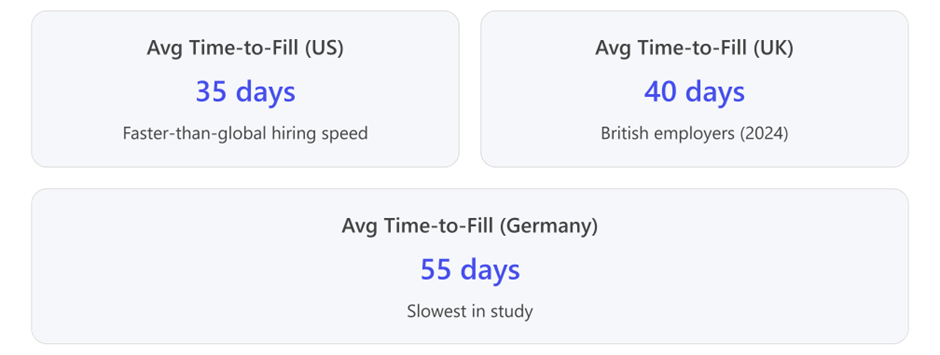
A 2024 study reports an average time-to-fill of 35 days in the US, compared to 40 days in the UK, and 55 in Germany—one of the slowest among advanced economies. The global median is 38 days, placing the US ahead and many EMEA markets slightly behind.
Why EMEA Hiring Takes Longer
Notice Periods & Start Dates
European hires often face long notice periods—1–3 months, and up to 6 months for senior roles—versus the US’s typical two weeks. Even after signing, roles remain vacant longer. Companies like Amazon and Google start hiring early in Europe to account for delayed start dates. Some US firms offer buyouts to shorten notice periods, but this isn’t always accepted in Europe.
Approvals & Compliance
EMEA hiring often includes extra steps. In France and Germany, companies must post roles internally or consult works councils before hiring externally. Microsoft’s EMEA guide notes a 2-week internal posting requirement in France. These steps ensure fairness but slow down hiring. US processes are leaner, with fewer mandatory delays.
Geographic Spread
EMEA recruiters often search across countries to find niche talent, adding time for scheduling, interviews, and visas. Uber faced this when staffing tech hubs in Amsterdam. Remote interviewing helps, but cross-border hiring still introduces delays.
Decision-Making Culture
European hiring often involves more stakeholders and consensus. GE’s European teams may include HR, hiring managers, and works council reps, while US teams rely on just HR and the manager. Candidates also expect slower processes, reinforcing the pace.
Implications & Solutions
Slow hiring in EMEA can cost companies top talent. A London fintech firm taking 3 months to make an offer risks losing candidates to faster-moving US firms. The UK’s 84% offer acceptance rate (vs. ~90% in faster markets) reflects this.
Leading companies are closing the gap with smart strategies:
Talent Pipelining
Microsoft and Amazon build candidate pools in advance. Amazon runs frequent career days to keep a bench of ready talent.
Automation & AI
European teams use AI for CV screening, scheduling, and multilingual support. Uber’s AI cut time-to-hire by 25% in the US and showed similar gains in EMEA.
Streamlined Interviews
Google standardized interviews to ~4 rounds globally. EMEA teams now run steps in parallel—starting reference checks while awaiting approvals. Tesla used this approach during its Berlin Gigafactory ramp-up, combining hiring fairs with fast-track interviews.
Internal Mobility
Internal hires move faster. The UK leads with 10% of roles filled internally. GE often promotes from within, reducing time-to-fill significantly.
In summary, Time to Fill: EMEA vs US trends helps Global TA leaders to plan their regional strategies. EMEA’s longer time-to-fill stems from structural and procedural differences.
However, companies are adapting—streamlining processes, anticipating delays, and using tech to stay competitive.
You May Also Like
What is Time to Hire? →
Time to Hire measures how long it takes to fill an open position
Time to Hire Best Practices→
Read 4 Practical ways to Improve Time to Hire
How to Manage Cost Per Hire →
Learn 3 ways High-performing firms improve hiring cost
Improve Candidate Experience →
Guide with 10 Ways To improve candidate satisfaction
How to Improve Quality of Hire →
How to improve quality of hire, tapping into best practices from leading organizations