
Hiring great recruiters is one of the key responsibilities of a TA Leader.
“Hire great people and they’ll hire great people.” Amazon’s CEO emphasized this principle, which applies to building your recruiting team.
Look for recruiters with strong communication, proactiveness, industry knowledge, and a record of successful hires. Top companies assess traits like curiosity, diligence, and trust-building.
When hiring recruiters:
Assess their understanding of your business and how they’d find talent.
Evaluate their competencies with data, insights and metrics.
Review their sourcing strategies and networks.
Google and Amazon set high standards. They involve TA leaders and business managers in interviews and use role-plays to evaluate recruiter skills.
Onboarding and Training
Train recruiters thoroughly. Introduce them to your culture, products, and talent needs. Amazon trains “Bar Raisers” to uphold hiring standards. Apple invests in development through Apple University.
Encourage certifications in behavioral interviewing or LinkedIn Recruiter. Promote sharing of best practices.
Defining Team Roles
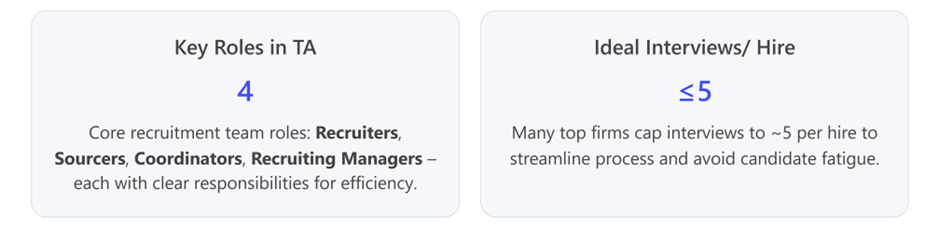
Clarify roles to scale effectively:
Recruiting Managers set strategy and coach the team.
Recruiters manage full-cycle hiring.
Sourcers find passive candidates for tough roles.
Coordinators handle scheduling and logistics.
Large firms like Microsoft and Google use dedicated sourcing teams. Sourcers map talent pools while recruiters focus on assessment and stakeholder engagement.
Building Team Culture
Foster collaboration and continuous learning. Share successful strategies. Pair junior recruiters with mentors. Meta relied on mentorship during rapid growth to maintain quality.
Provide career paths. Senior recruiters can grow into TA managers or sourcing leads. Investing in recruiter development boosts retention.
Performance Management
Use data to track performance. Key metrics include time-to-fill, offer acceptance, and satisfaction scores. Share metrics openly and celebrate wins.
Gather 360-feedback from hiring managers and candidates. Top companies use this to improve recruiter effectiveness.
Hiring great recruiters and investing in their growth builds world-class TA teams. These teams drive business success. As one expert said, “Recruiters are the gateway to talent. Strong gatekeepers build strong companies.”
You May Also Like
Onboarding New Recruiters →
Effectively onboarding new recruiters will help them ramp up quickly and maintain high standards
Strengthen Hiring Manager Collaboration →
Empower your team to develop effective Recruiter-Hiring Manager collaboration.
Partner with Finance for Forecasting →
Learn 7 simple ways that TA and Finance can collaborate.
Build Global Talent Sourcing Hubs →
This report analyses how leading organizations have structured their talent sourcing functions.
Improve Candidate Experience →
As you build a high performing team, one key priority is how to improve candidate experience.
Embed Inclusive Hiring Practices →
Learn ways how your team can embed inclusive hiring with conviction.