
These recruitment planning templates help recruiters and hiring managers align early, define job needs, and plan strategy before sourcing candidates.
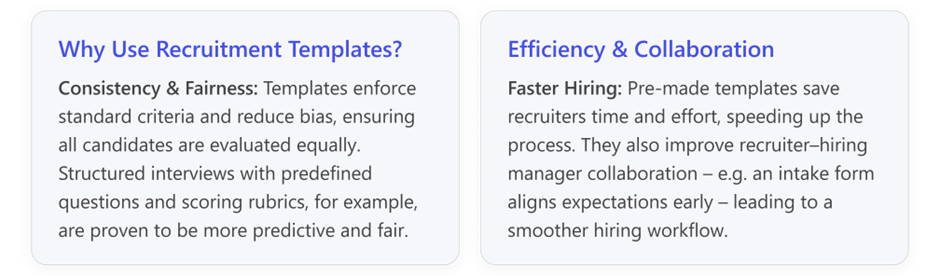
To ensure consistency, fairness, and efficiency in hiring, large organisations create standardized templates for each stage of recruitment. These templates provide a professional layout that guides recruiters and hiring managers through the process
Job Requisition Approval Form
This form authorizes a new hire. Include position details, justification (backfill or new role), salary range, and approvals. Use a checklist to confirm budget, headcount, and policy compliance. Catch approval issues early to avoid delays.
Hiring Manager Intake Form
Use this form at the start to capture role details and hiring manager expectations. It covers job title, location, skills, experience, start date, and more. Include background (role level, department), qualifications, ideal profile, and hiring timeline. Include sourcing strategy, interview process, and logistics. Standardizing intake reduces bias and miscommunication.
Use this in job kick-off meetings with HR and hiring teams. Outline recruitment goals, sourcing channels, and timelines. Define interview panel roles, advertising strategy, and screening methods. Align on responsibilities, evaluation criteria, and bias prevention. This form sets a clear game plan for finding and assessing candidates.
Job Description (JD) Template
Write clear, structured JDs using this format. Include:
Position Summary
Responsibilities
Required and Preferred Qualifications
Company Information
Use inclusive language and avoid jargon. Gender-neutral wording attracts more candidates. Include tips for neutral phrasing and focus on core competencies. Structured JDs reflect company culture and help market the role effectively.
Job Posting Template
Format job ads for external platforms. Mirror the JD but keep it concise and SEO-friendly. Include a compelling intro, role details, and application instructions. Add equal opportunity statements and branding snippets. Use approved templates to ensure consistency and compliance.
Sourcing Strategy Template
Plan how to attract candidates. Use a checklist to list sourcing channels: job boards, social media, referrals, agencies, campus recruiting, and inclusive hiring. Add details like posting dates and referral incentives. Discuss target companies and sourcing tactics with the hiring manager.
In summary, recruitment planning templates delivers the following:
Front-load planning for better results. Strong intake and kickoff forms lead to smoother searches and better hires. Clear role definitions improve retention.
These templates also strengthen recruiter–manager collaboration, turning recruiters into strategic advisors.
You May Also Like
What is Time to Hire? →
Time to Hire measures how long it takes to fill an open position
Improve Candidate Experience →
Guide with 10 Ways To improve candidate satisfaction
How to Manage Cost Per Hire →
Learn 3 ways High-performing firms improve hiring cost
How to Improve Quality of Hire →
How to improve quality of hire, tapping into best practices from leading organizations
Inclusive Hiring Practices→
Track how well an organization is attracting and hiring candidates from underrepresented groups