
Understanding the distinction between skills-based and competency-based hiring is essential.
Though they sound alike, they differ in focus and method. This article will provide clarity on skills-based vs competency-based assessment.
Skills-Based Hiring
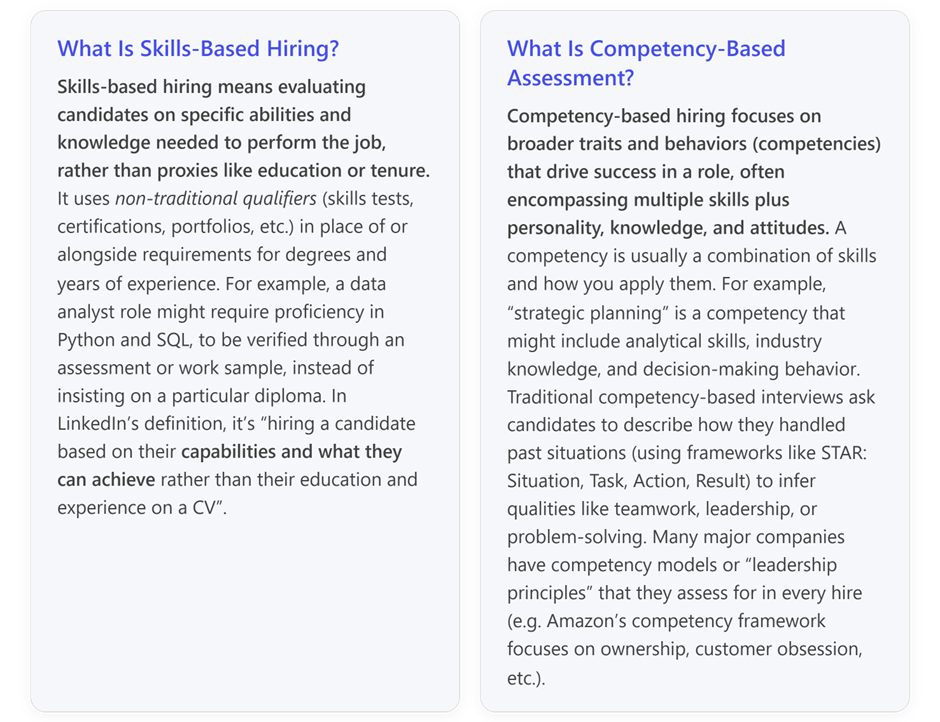
This prioritises the specific abilities and knowledge directly relevant to a role—what a person can do. Evaluations are practical and performance-driven, such as coding tests, technical assessments, portfolio reviews, or certifications.
This approach values demonstrated capability over formal credentials. For example, a job description might list Python proficiency and data analysis, with candidates screened via online tests or work samples.
As one Amazon HR leader put it, it’s about hiring “based on capabilities and what they can achieve rather than their education and experience on a CV.”
Competency-Based Hiring
This assesses broader traits—how a person approaches work. Competencies combine skills, behaviours, and attitudes. For instance, “strategic planning” may include analytical thinking, decision-making, and leadership.
This method has long been used by major firms, often through behavioural interviews asking candidates to describe past experiences (e.g. “Tell me about a time…”). The aim is to predict future performance based on past behaviour.
In short: skills are the “what”, and competencies are the “how.” Someone may code in Java (skill), but their approach to software design or troubleshooting reflects their competency. Competency models also include personal attributes like grit or empathy, which influence performance.
Large companies have traditionally favoured competency-based methods, especially for leadership roles. Many use structured interviews and competency dictionaries (e.g. communication, strategic thinking). Amazon, for example, uses its Leadership Principles to guide interviews and assess cultural attributes.
However, competency-based hiring has limitations. It often relies on past experience, which can disadvantage capable candidates without formal roles. It may also be subjective and slow to reflect emerging technical skills.
By contrast, skills-based hiring is more inclusive and task-focused. It allows candidates to prove themselves through demonstrations.
For example, IBM, expanded its talent pool by using skill tests and bootcamp credentials, hiring those who could code or analyse data regardless of their academic background.
Leading organisations now blend both approaches. A “skills-first” process might begin with a technical assessment, followed by a behavioural interview.
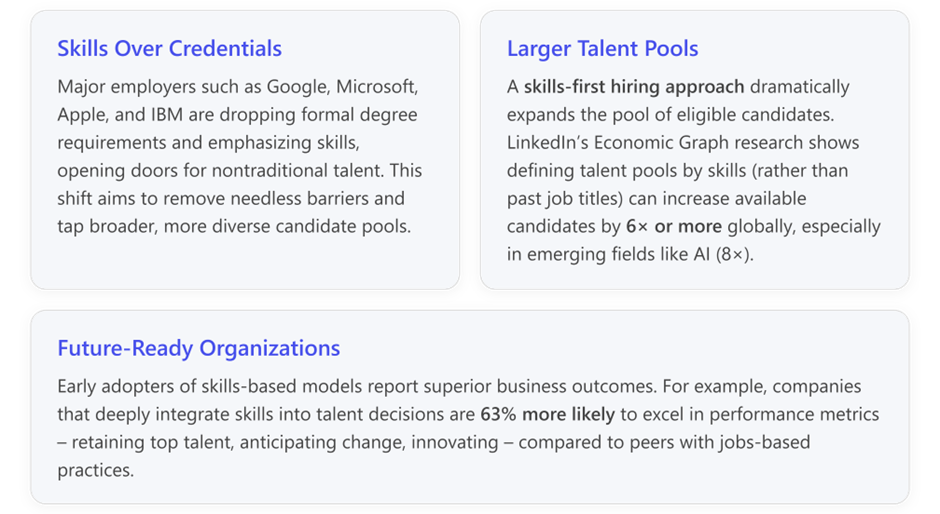
LinkedIn research shows many hiring managers still use experience as a proxy for skills, but skills tests offer concrete evidence that can win over sceptics.
Ultimately, both methods serve different purposes. Skills-based hiring verifies whether someone can do the job; competency-based hiring assesses whether they’ll thrive in the role and culture. The future lies in combining both—moving beyond education and tenure to focus on capability and potential.
You May Also Like
What is skills-based Hiring Model →
Understanding what skills based hiring is.
The value of skills-based hiring →
Adopting a skills-based hiring model delivers measurable business value.
How to structure interviews →
Learn how to achieve better results from structured interviews