
Adopting a skills-based hiring model delivers measurable business value. Research and early adopter results show improvements across talent acquisition, performance, and workforce agility.
1. Larger Talent Pool and Faster Hiring
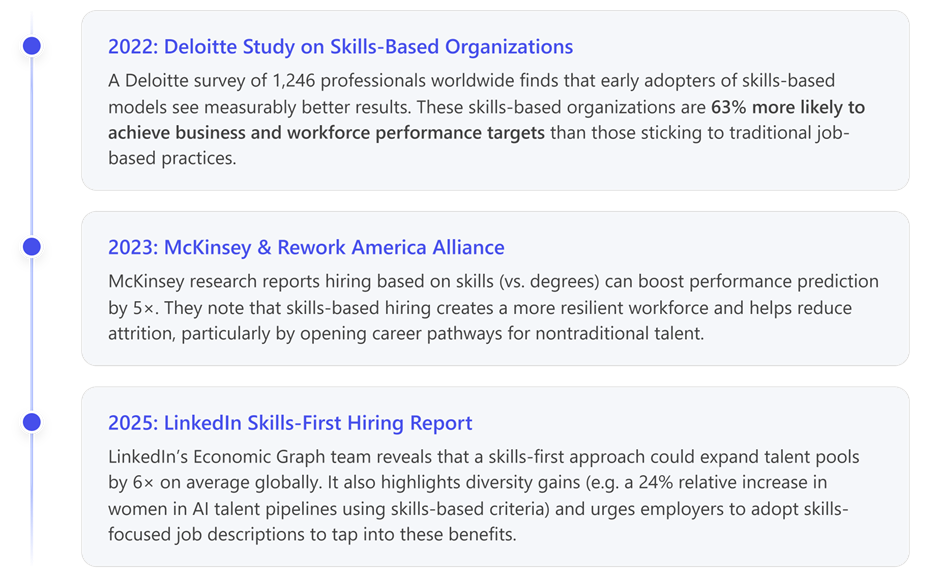
Skills-based criteria widen the pool of qualified candidates by removing rigid requirements like “5+ years in the same role.” LinkedIn data shows a 6.1× global increase in candidate pool.
Organisations report faster hiring, especially for hard-to-fill roles. For example, Massachusetts saw increased applicants and quicker recruitment after switching to skills-based hiring.
2. Improved Job Performance
Hiring based on verified skills leads to stronger performance. McKinsey found skills-based hiring is five times more predictive of success than education and twice as predictive as prior experience. LinkedIn’s survey showed 66% of hiring professionals believe it improves employee performance.
3. Higher Retention and Engagement
Skills-based hiring matches people to roles they’re passionate about, boosting engagement and retention. Employees hired for their abilities feel more valued. LinkedIn data shows those without traditional degrees stay 35% longer.
Firms promoting internal mobility through skills development see employees stay twice as long. Kaiser Permanente trained nurses into specialties based on skills, reducing turnover.
4. Agility and Resilience
Skills-based organisations respond faster to change. By tracking employee skills, they redeploy talent quickly. During the pandemic, retailers shifted staff from stores to fulfilment roles based on skills. Deloitte found such organisations were 57% more likely to anticipate change and 52% more likely to innovate.
5. Fairer Employee Experience
Employees value advancement based on capability, not tenure. Skills-first cultures motivate learning and growth. Blind skill assessments reduce bias, making hiring more merit-based. LinkedIn found 81% of workers prefer employers who value skills over background. In addition, Deloitte reported in 2022 that skills-based organisations are 98% more likely to be rated as great places to grow.
In summary, skills-based hiring enhances performance, diversity, agility, and employee satisfaction—making it a strategic advantage in today’s dynamic workplace.
You May Also Like
What is skills-based Hiring Model →
Understanding what skills based hiring is.
Skills-based vs Competency-based interviews →
Explore the distinction between these assessment models.
How to structure interviews →
Learn how to achieve better results from structured interviews